

STANDARDS · LEEA
Every lifting examination, scheduled and on record
As a LEEA Associate Member, Papertrail can schedule LOLER thorough examinations and PUWER inspections, and keep every report on the item's record.
No credit card required.


What is LEEA, and why does membership matter?
LEEA, the Lifting Equipment Engineers Association, is the lifting industry's own trade body. It publishes COPSULE, the Code of Practice for the Safe Use of Lifting Equipment, currently in its 10th edition: practical guidance on operating, maintaining and inspecting lifting equipment that much of the UK lifting industry works to day to day. LEEA also runs its own Training Academy, issuing TEAM cards as a professional credential for trained examiners, and technically audits its member companies on an ongoing basis, not a one-off join fee.
LEEA doesn't write or enforce LOLER or PUWER. Those remain UK statutory instruments, enforced by the Health and Safety Executive. What LEEA membership means is that a company's examiners have been trained against COPSULE and the company itself is under LEEA's own ongoing technical audit, a mark of standing in the industry that goes beyond what the law alone requires.
In Papertrail, each piece of lifting equipment can have its own schedule and checklist, signed off by your competent person, with every examination kept on its record.
- What it is
- the lifting industry's own trade body
- Code of practice
- COPSULE, the Code of Practice for the Safe Use of Lifting Equipment, currently in its 10th edition
- Credential
- TEAM cards
LOLER and PUWER, in brief
LOLER (the Lifting Operations and Lifting Equipment Regulations) requires a thorough examination of lifting equipment by a competent person: every 6 months for equipment that lifts people and for lifting accessories, every 12 for other lifting equipment, unless an examination scheme sets a different interval.
PUWER (the Provision and Use of Work Equipment Regulations) covers the rest of your work equipment, inspected at suitable intervals. Both are HSE-enforced statutory instruments, not LEEA's own guidance, though LEEA's COPSULE gives practical guidance on meeting LOLER.
Every 6 monthsLOLER
- Equipment that lifts people
- Lifting accessories
Every 12 monthsLOLER
- Other lifting equipment
Inspected at suitable intervalsPUWER
The rest of your work equipment
No credit card required.
What a LOLER or PUWER record contains
Each item's record can hold the details a thorough examination or inspection needs: identity (equipment ID, safe working load), history (installation date, every examination and its result) and paperwork (the examiner's name and qualifications, the next-due date), all on one item record from day one.
Every inspection, defect and repair logs against that same record too, so the full history is there the moment an auditor asks, not dug out of a spreadsheet.
No credit card required.
Lifting examinations, scheduled and signed off
Schedule Manager
LOLER's 6 or 12-month thorough examination and PUWER's risk-assessed inspection interval each run on their own frequency, with an alert before anything falls due.
Inspections
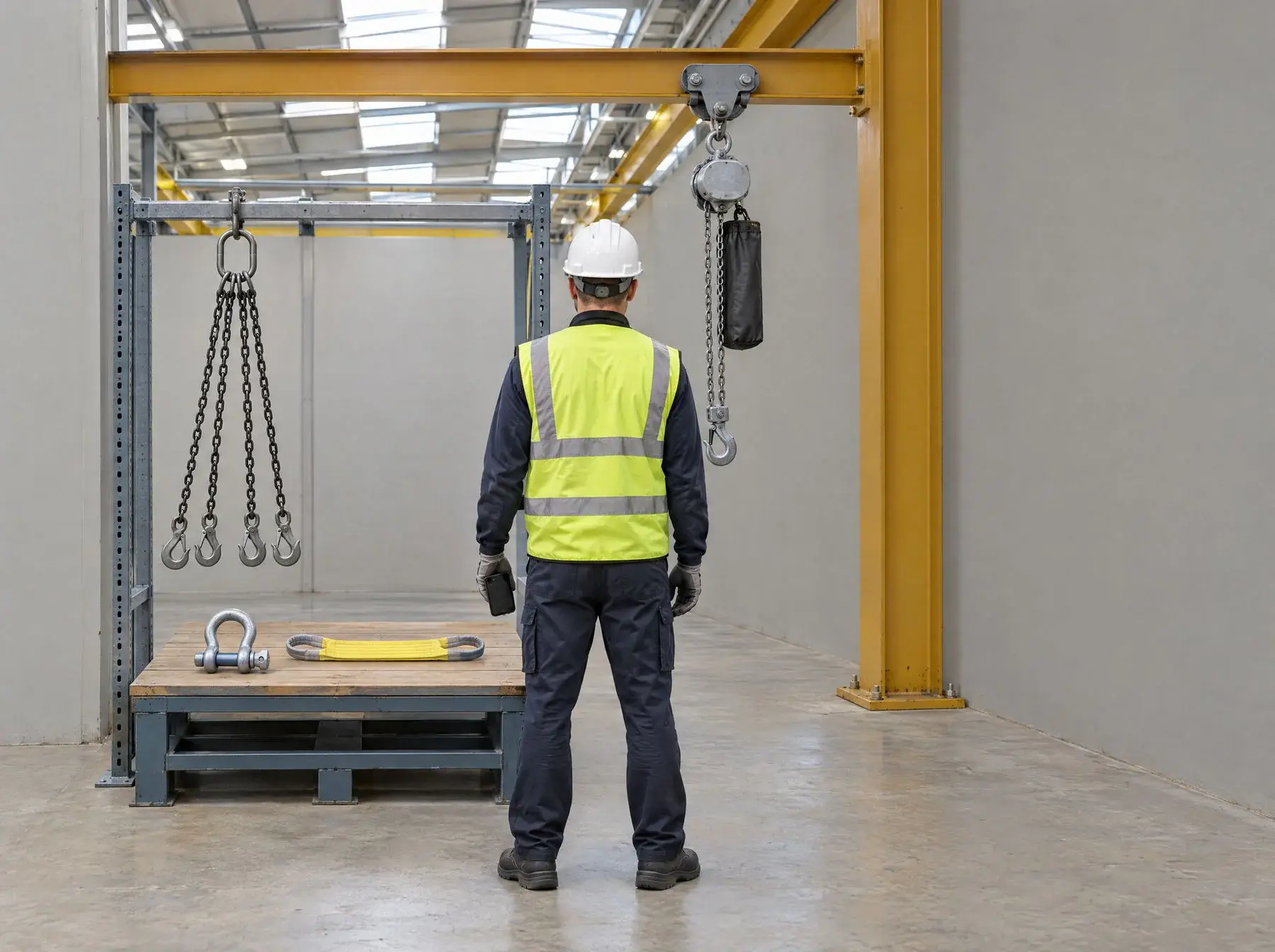
Every inspection records who carried it out, against which checklist, with the outcome landing on the item's permanent history, visible to a client or auditor connected through PartnerHub. Restrict who's allowed to add or edit that record at all, so only the people you authorise can sign one off.
Certificates
Your report of thorough examination is filled in from the equipment's record and the completed checklist, with the details LOLER requires, ready to share once it's signed off.
Task Manager
When a check fails under either regulation, Papertrail can raise a task for the repair, so the failed check doesn't sit unresolved in a completed checklist.
Schedule Manager
LOLER's 6 or 12-month thorough examination and PUWER's risk-assessed inspection interval each run on their own frequency, with an alert before anything falls due.
Inspections
Every inspection records who carried it out, against which checklist, with the outcome landing on the item's permanent history, visible to a client or auditor connected through PartnerHub. Restrict who's allowed to add or edit that record at all, so only the people you authorise can sign one off.
Certificates
Your report of thorough examination is filled in from the equipment's record and the completed checklist, with the details LOLER requires, ready to share once it's signed off.
Task Manager
When a check fails under either regulation, Papertrail can raise a task for the repair, so the failed check doesn't sit unresolved in a completed checklist.
1 of 4
Checklist Editor
Inspect
Use manufacturer-approved checklists for any equipment type, from lifting gear to PPE inspection records. Build your own with the Checklist Editor on Expert and Enterprise.


Who this applies to

Equipment owners and employers must arrange the examinations and inspections, keep the records, and be able to produce them on demand. RWE's Claire Swannick, Logistics Coordinator at RWE Triton Knoll, has described complying with both PUWER and LOLER through Papertrail as easier than the process it replaced.

Competent persons and inspection contractors, in-house engineers or an external inspection company carrying out the examination, need to hand back evidence the equipment owner's auditor will accept.
Common questions
How often must lifting equipment be thoroughly examined under LOLER?
Every 6 months for equipment that lifts people and for any lifting accessory, such as a chain, sling or shackle. Every 12 months for other lifting equipment. An examination scheme can set a different interval where one has been drawn up for that equipment. (LOLER Regulation 9.)
Is LEEA the body that enforces LOLER and PUWER?
No. LOLER and PUWER are statutory instruments made under the Health and Safety at Work etc. Act 1974 and enforced by the Health and Safety Executive (HSE). LEEA, the Lifting Equipment Engineers Association, is a trade body: it publishes its own guidance (COPSULE), trains and credentials examiners through its Training Academy, and technically audits its own member companies, but it did not write and does not certify either regulation. Papertrail is a LEEA Associate Member.
Who counts as a competent person for a LOLER examination?
Someone with practical and theoretical knowledge and experience of the equipment being examined, sufficient to detect a defect or weakness and judge its significance for safety, and independent enough to make that judgement impartially. They can be employed in-house or brought in from outside. Papertrail can also restrict who's allowed to add or edit an examination record at all, so authority in the system matches who's actually authorised to sign one off.
Does PUWER apply to equipment that LOLER already covers?
Partly. PUWER Regulation 6's formal inspection duty specifically excludes lifting equipment, because LOLER's thorough examination already covers that ground. PUWER's other duties, keeping equipment suitable for the job and properly maintained, still apply to lifting equipment the same as anything else at work.
Does Papertrail support LOLER and PUWER inspections out of the box?
Yes. LOLER thorough examinations and PUWER inspections each run as their own schedule per item, with a checklist, competent-person sign-off and a certificate, and a permanent history for every piece of equipment.
Can Papertrail produce LOLER certificates?
Yes, on every plan. The report of thorough examination is filled in from the equipment's record and the completed checklist, with the particulars LOLER Regulation 10 and Schedule 1 require, and exported as a PDF with your company logo. You can produce one for a single item, for several items or for a whole folder. Each certificate is kept with the item's inspection history, so you can show it whenever an auditor or client asks. If you need your own layout, we can build a custom certificate template for your account, for a one-off charge based on how complex it is.
Every lifting examination, in one place
Book a demo and we'll walk through it with your own lifting equipment, or start for free and add your first item.
26 million inspections recorded· No obligation.
Last reviewed on . MJB.